



A good ham stock recipe lets you get even more mileage out of your holiday ham. With just a pot, a few aromatics, and those leftover bones, you can make a broth that’s full of steady, savory flavor. It’s simple to pull together and works for soups or any dish that could use a little extra richness, helping your ham dinner go further in the best way.

When you make ham stock at home, that long, gentle simmer pulls steady flavor and nutrients from real vegetables, herbs, and ham bones, giving you a cleaner result than packaged broth. It naturally runs lower in sodium than bottled broth, since you’re relying on ingredients instead of additives. It’s an easy method that turns leftovers into a healthier base for soups and everyday cooking.
❤️ Why you will love this recipe
- Great flavor: The long simmer creates a smooth, savory base that boosts anything you add it to.
- Leftover-friendly: Ham bones and simple veggies become a broth you can use all week.
- Simple: It’s one pot, whether you use the stove, slow cooker, or Instant Pot.
- Clean ingredients: It’s made from clean, familiar ingredients – no processed additives.
- Versatile: Works in soups, grains, braises, or any dish that normally calls for stock.
🗝️ Key Ingredients & Substitutions

- Ham hock or bones: These provide steady pork flavor for the stock. Leftover ham bones, a ham shank, or a meaty ham hock all work well, and smoked pork bones are a great option if you’re making the stock without cooking a whole ham first.
- Celery: Adds gentle freshness and balances the richness. You can swap in extra carrots or onions if you’re short on celery.
- Carrots: Brings some sweetness to round out the broth. Parsnips or sweet potato scraps can fill in if needed.
- Leek: Lends a soft, savory depth. Use more onion or a handful of green onions if leeks aren’t available.
- Onion: Builds the base flavor. Swap in green onions, shallots, or an extra leek if you’re out.
- Garlic: Adds warmth and savory depth. Garlic powder can step in if you’re out of fresh garlic.
- Thyme: Gives the broth subtle herbal notes. Use either dried or fresh, or swap in rosemary or parsley if needed.
- Bay leaves: Bring a subtle, earthy lift. You can leave them out if you don’t have any.
- Peppercorns: Adds mild heat and spice. A pinch of ground pepper works in a pinch.
- Water: Use less water for a stronger broth. You can top up with chicken stock if you want a milder flavor than full ham stock.
🥣 How to make homemade ham stock
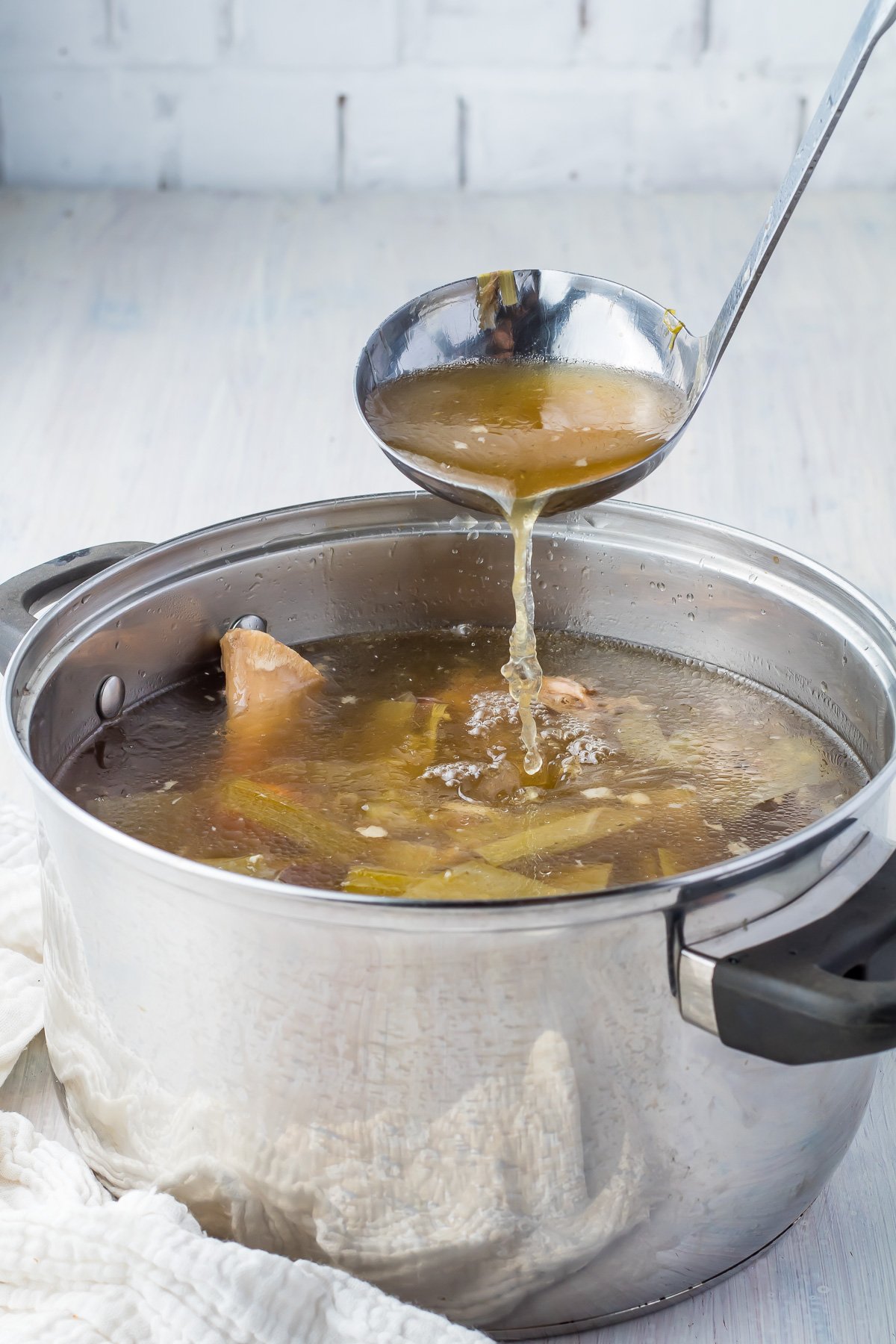
Stovetop:
- Load the pot: Place the ham hock, bones, or shank into a large pot or Dutch oven, then add the chopped vegetables, garlic, herbs, peppercorns, and bay leaves.
- Add the water: Pour in enough cold water to sit a couple of inches below the rim so the pot has room to simmer.
- Bring to a boil: Set the heat to medium-high and skim off any foam once bubbles begin to form on the surface.


- Simmer gently: Lower the heat and let it cook for 3-4 hours, tasting around the 3-hour mark to see if it needs more time.
- Strain the broth: Pour the stock through a fine-mesh strainer to remove all solids, leaving you with clear, steady broth.
Slow Cooker:
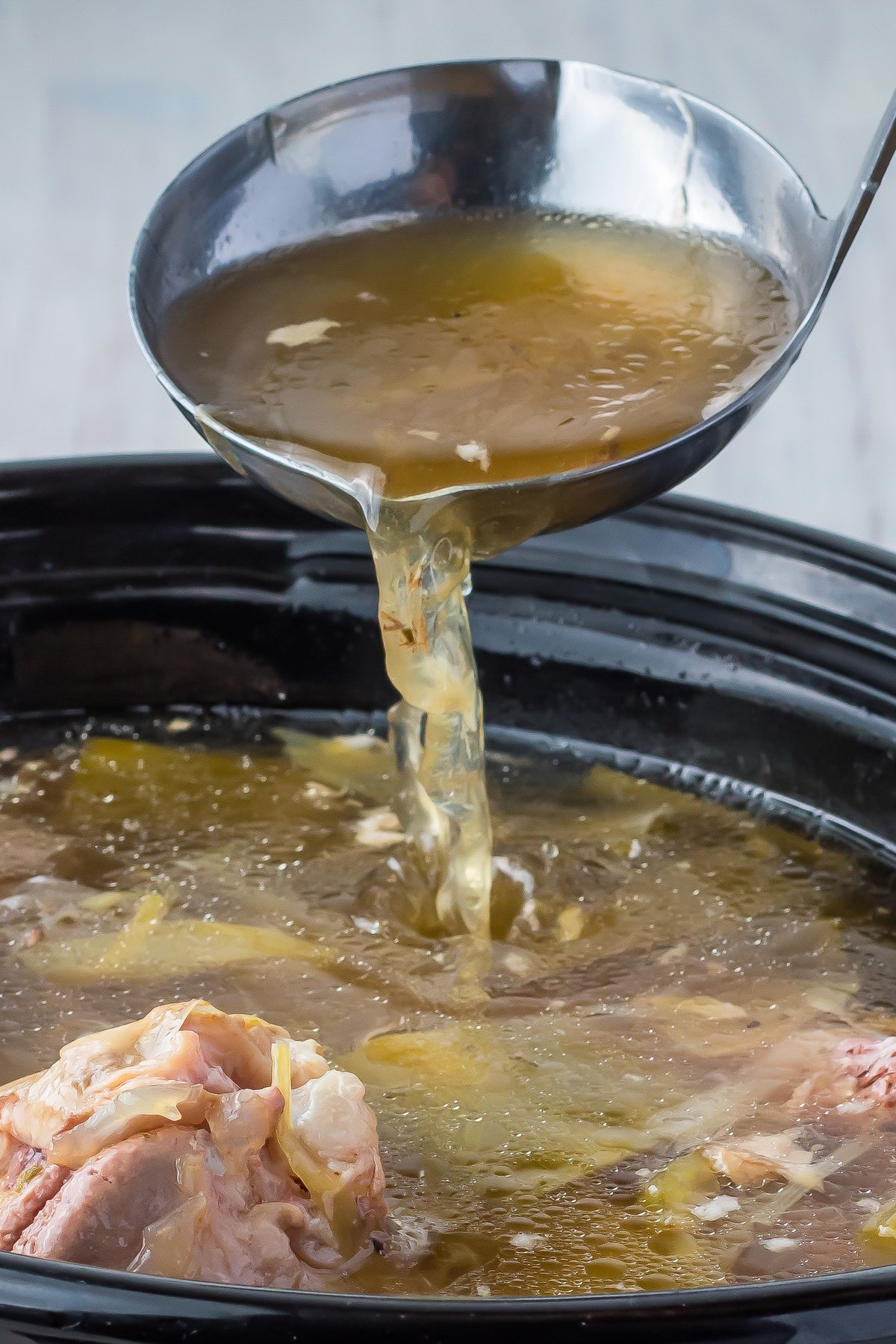
- Fill the cooker: Add the ham bones, vegetables, garlic, herbs, bay leaves, and peppercorns to the slow cooker.
- Top with water: Pour in enough cold water to bring the level close to the top without overflowing.
- Set the heat: Cook on high for 6 hours or low for 10 hours, depending on how hands-off you want it.


- Keep the lid closed: Resist lifting the lid so the heat stays consistent and the broth cooks evenly.

- Strain the broth: When the timer ends, turn off the heat and strain everything through a fine-mesh strainer.

Instant Pot:
- Load the pot: Place the ham bones, chopped vegetables, garlic, herbs, bay leaves, and peppercorns into the Instant Pot.


- Add water: Fill with cold water up to the max fill line.

- Seal the lid: Secure the lid and set the valve to Sealing.
- Pressure cook: Choose Pressure Cook, select High Pressure, and set the timer for 1 hour.
- Natural release: Let the Instant Pot release pressure naturally for about 30 minutes for a clearer broth.

- Strain the stock: Open the pot carefully and pour the broth through a fine-mesh strainer to remove solids.

🪄 Recipe notes & tips
- Skim often: Removing the foam early keeps the stock clear and gives it a cleaner flavor.
- Low and slow: A gentle simmer extracts steady flavor without turning the broth cloudy.
- Brown first: Searing the ham bone in a little oil adds deeper flavor if you’re starting with a fresh hock or shank.
- Adjust water: Use less water for a stronger stock, and top up only if the pot reduces more than expected.
- Strain well: A fine-mesh strainer removes small bits and keeps the broth smooth.
🫙 Storage instructions
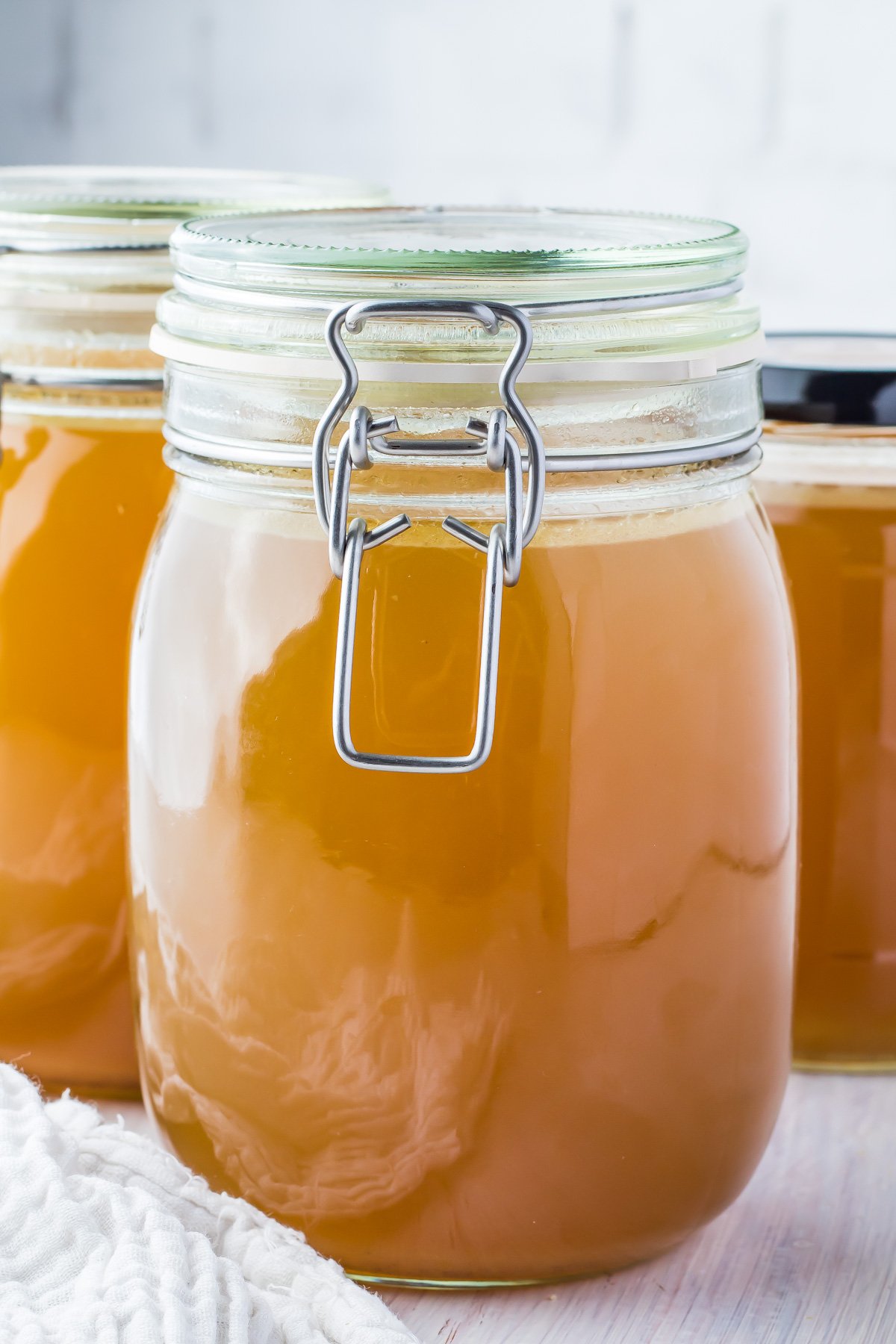
- Fridge: Keep the stock in airtight containers for up to a week, leaving space at the top for expansion.
- Fat layer: Lift off the solid fat once chilled, or leave it on top to help the broth stay fresh longer.
- Freeze: Pour the stock into ice cube trays or containers and freeze for long-term storage.
- Thaw: Let frozen stock thaw in the fridge overnight, or warm it gently in a pot if you need it sooner.
🍽️ How to use ham stock
- Soups: Use it in pea soup, potato soup, lentil soup, white bean soup, or simple vegetable soups.
- Grains: Cook basmati rice, quinoa, or barley in the stock for extra flavor.
- Stews: Add it to beef stew, cabbage stew, or vegetable stew for a deeper base.
- Beans: Simmer black-eyed peas, pinto beans, black beans, or navy beans in the broth.
- Vegetables: Braise cabbage, carrots, or greens in the stock for easy side dishes.
❓ Frequently asked questions
While vegetables add depth and complexity to the stock, you can make it with just the ham bone if preferred.
A gelatinous texture indicates that you’ve successfully extracted collagen from the bones when making stock, which turns into gelatin as it cools. This is a good sign of a well-made stock!
While you can reuse it, the second batch might be less flavorful as most of the flavor would’ve been extracted in the first round.
Absolutely. The bone has plenty of flavor on its own, and a long simmer pulls out everything you need.
Not quite. Since it’s just real ingredients, you’ll want to use it within a week or tuck it into the freezer for a longer stretch.
For sure. Anywhere you’d normally pour in chicken or beef stock, this steps in with a little extra character.
😋 More Comforting Recipes You Will Love
- Whole30 Zuppa Toscana
- Vegan Three Bean Chili
- Slow Cooker Beef Stew
- Sweet Potato and Apple Casserole
- Gluten-Free Ramen Noodle Soup Recipe
- Keto Miso Soup
- The BEST Gluten-Free Cornbread Recipe
- Keto White Chicken Chili
Have you made this recipe? I’d love to know <3 Tag me (@makehealthyrecipes) on Facebook and Instagram, Pin it on Pinterest, and please give it 5 stars with a review below! Don’t forget to subscribe to the email list (top right of this page) for sparkly new recipes in your inbox.
📖 Recipe

Ham Stock Recipe

Ingredients
- 1 ham hock or ham shank or leftover ham bones and meat from a roast
- 2 celery sticks chopped
- 2 carrots chopped
- 1 leek chopped
- 1 onion washed, unpeeled, and cut into quarters
- 1 head garlic quartered in an cross shape
- 3 teaspoons dried thyme or 2 sprigs fresh
- 2 bay leaves
- 15 black peppercorns
- 2.8 liters water 12 cups, or until your appliance is full or pot is almost full
Instructions
For the Stovetop:
- Add all of the ingredients to either a large pot or dutch oven. Add the water 2-3 inches below the rim, leaving some space for boiling. Bring the stock to a boil over medium-high heat. When bubbles appear on the surface, skim them off.
- Then, lower the temperature to medium-low and cook for 3-4 hours. Taste after 3 hours and if it's not strong enough, give it some extra time.
- When it's ready, strain the stock through a fine-mesh strainer and either use immediately or allow it to cool completely and store it in the fridge or freezer. See below for more storage instructions.
For the Slow Cooker:
- Add all of the ingredients to the slow cooker. Fill the slow cooker with water and cook it on high for 6 hours or low for 10.
- When it’s finished, strain the stock through a fine-mesh strainer and either use immediately or allow it to cool completely and store it in the fridge or freezer. See below for more storage instructions.
For the Instant Pot:
- Add all of your ingredients to the instant pot. Fill the water up to the maximum line, and close the lid.
- Turn the vent to “sealing” on the lid. Press “pressure cook”, then “high pressure”, and set the timer for one hour. When it's finished, allow it to release naturally (about 30 minutes).
- Strain the stock through a fine-mesh strainer and either use it immediately or allow it to cool completely and store it in the fridge or freezer. See below for more storage instructions.
Notes
- Skim often: Removing the foam early keeps the stock clear and gives it a cleaner flavor.
- Low and slow: A gentle simmer extracts steady flavor without turning the broth cloudy.
- Brown first: Searing the ham bone in a little oil adds deeper flavor if you’re starting with a fresh hock or shank.
- Adjust water: Use less water for a stronger stock, and top up only if the pot reduces more than expected.
- Strain well: A fine-mesh strainer removes small bits and keeps the broth smooth.
STORAGE INSTRUCTIONS:
- Fridge: Keep the stock in airtight containers for up to a week, leaving space at the top for expansion.
- Fat layer: Lift off the solid fat once chilled, or leave it on top to help the broth stay fresh longer.
- Freeze: Pour the stock into ice cube trays or containers and freeze for long-term storage.
- Thaw: Let frozen stock thaw in the fridge overnight, or warm it gently in a pot if you need it sooner.
This is my new favorite recipe for ham stock, so easy and tasty.
So glad you like it, Harold! Thank you for the kind comment =]